Germany, Black Rats Tupamaros West Berlin (1969-1970)
Random Quotes
Wrong!
Unfortunately wrong answer.
Try again!
The answer was
OK
next
previous
Every ceremony in West Berlin and in West Germany suppresses the fact that the Kristallnacht of 1938 is repeated daily by the Zionists in the occupied territories, in the refugee camps and in the Israeli prisons. The Jews expelled by fascism have themselves become fascists who, in collaboration with American capital, want to eradicate the Palestinian people.
Correct!
Every ceremony in West Berlin and in West Germany suppresses the fact that the Kristallnacht of 1938 is repeated daily by the Zionists in the occupied territories, in the refugee camps and in the Israeli prisons. The Jews expelled by fascism have themselves become fascists who, in collaboration with American capital, want to eradicate the Palestinian people.
Year:
1969
Author Bio:
Source:
Schwarze Ratten TW, Schalom und Napalm, leaflet, in: AGIT 883, No. 40 from 13.11.1969, 9.
Context:
Tupamaro’s black rats emerged from the subcultural milieu in West Berlin and were officially founded in 1969. Based on the city guerrilla concept of South America, the group saw itself as part of the internationalist and anti-imperialist movement. An essential part of their ideological orientation was a pronounced anti-Zionism and anti-Semitism, which found expression in a bomb attack on the Jewish parish hall in Berlin’s Fasanenstrasse on November 9, 1969. After leading figures were arrested, the group disbanded in July 1970.
Further Reading:
OK
“All men are equal in terms of basic human dignity and basic obligations and responsibilities, without any discrimination […]. True faith is the guarantee for enhancing such dignity along the path to human perfection.”
Correct!
“All men are equal in terms of basic human dignity and basic obligations and responsibilities, without any discrimination […]. True faith is the guarantee for enhancing such dignity along the path to human perfection.”
Year:
1990
Author Bio:
The Organization of Islamic Cooperation
Source:
Quote: The Cairo Declaration of Human Rights in Islam (CDHRI)
Picture: Decorative logo from p. 2 of Cairo Declaration on Human Rights in Islam. Quelle: Official Document System of the United Nations (ODS).
Context:
 The quote comes from the Cairo Declaration of Human Rights in Islam. It was adopted by the Conference of the Organization of Islamic Cooperation in 1990. It was the result of criticism that the Universal Declaration of Human Rights was “a secular interpretation of the Judeo-Christian tradition” and therefore could not be followed by Muslims without violating their own law, according to the Iranian representative to the United Nations, Said Rajaie-Khorassani, in 1981. The Cairo Declaration is therefore explicitly based on Islamic Sharia law. This creates a tension that is also expressed in the quote. On the one hand, human dignity is guaranteed “without discrimination of any kind” – explicitly including discrimination based on “religious belief” – while on the other, “true faith” is the “guarantee for the enjoyment of such dignity”.
Further Reading:
*Eva Brems (2001): “Islamic Declarations of Human Rights”, in: Human rights: universality and diversity. Vol. 66 of International studies in human rights. Martinus Nijhoff Publishers. pp. 241-284.
*Jonathan Russell (10th Dec 2012): The Universal Declaration vs The Cairo Declaration, LSE.
OK
The more the culture of countries increases, the narrower the desert becomes, the rarer its wild inhabitants.
Correct!
The more the culture of countries increases, the narrower the desert becomes, the rarer its wild inhabitants.
Year:
1784
Author Bio:
Johann Gottfried Herder (1744-1803) was a German writer and philosopher. He was one of the most important minds in German-language Enlightenment philosophy.
Source:
Johann Gottfried Herder (1903 [1784]): Ideen zur Philosophie der Geschichte der Menschheit. Leipzig: Reclam. Darin: Alle zerstörenden Kräfte in der Natur müssen den erhaltenden Kräften mit der Zeitenfolge nicht nur unterliegen, sondern auch selbst zuletzt zur Ausbildung des Ganzen dienen. Fünfzehntes Buch, Kapitel II. p. 161.
Context:
 Herder has had a strong influence on Western understandings of culture. It was from him that the idea of a linear development of human culture came. While before the Enlightenment, nature was understood within Christianity as something positive, and humankind’s original condition as “paradise”, Herder found nature to be uncultured. In his view, culture was itself ethnic. Thus he linked it to the concept of the nation: people and nation were one and the same, both given by God (Patton 2010).
Further Reading:
*Benedict Anderson (1984): Imagined Communities: Reflections on the Origin and Spread of Nationalism. London: Verso.
*Alan Patton (2010): “The Most Natural State”: Herder and Nationalism.
OK
In hot countries, men mature more quickly in every respect but they do not attain the perfection of the temperate zones. Humanity achieves its greatest perfection with the white race. The yellow Indians have somewhat less talent. The Negroes are much inferior and some of the peoples of the Americas are well below them.
Correct!
In hot countries, men mature more quickly in every respect but they do not attain the perfection of the temperate zones. Humanity achieves its greatest perfection with the white race. The yellow Indians have somewhat less talent. The Negroes are much inferior and some of the peoples of the Americas are well below them.
Year:
1764
Author Bio:
Immanuel Kant (1724-1804) was the most famous German philosopher of the Enlightenment. He spent most of his life in Königsberg. He was central to the shaping of racial theory in the German-speaking world.
Source:
Immanuel Kant (1764): Physische Geographie 2. T. 1. Abs. § 3 (IX 195). Königsberg: Göbbels und Unzer. Translation by David Harvey (2000): p. 4.
Context:
 Although universal human rights are commonly associated with the era of the Enlightenment, this was also the period in which racial theories emerged. The idea that all people were free and equal was a threat to those who benefited from inequality. So a parallel theory was needed in order to prove why some could not, after all, be fully equal (see above, Adorno and Horkheimer’s Dialectic of Enlightenment). Immanuel Kant attempted to construct a “race hierarchy” based on “reason”, “morality”, “maturity”, “the potential for being educated” and “laziness” as characteristics of otherness. He placed the white man at the centre of this ideology and made him the norm by which progress was measured. Kant’s devaluation of people of colour went so far that he wondered why certain regions of the world existed at all.
Further Reading:
*Emmanuel Chukwudi Eze (ed. 2007): Race and the Enlightenment: A Reader. New Jersey: Wiley-Blackwell.
*Devin J. Vartija (2021): The Color of Equality Race and Common Humanity in Enlightenment Thought. Philadelphia: University of Pennsylvania Press.
OK
I already heard white people say N**** to me in kindergarten
Don’t question the clichés, now knock down brothers
We demand more than equal rights, we want peace at last
Having new goals and not having the image of dealers
A motion is being discussed in the state parliament
And meanwhile, the next Nazi is planning his attack
The shameful deed is regretted, but I wonder:
“Why is there another black family at the grave?”
Correct!
I already heard white people say N**** to me in kindergarten
Don’t question the clichés, now knock down brothers
We demand more than equal rights, we want peace at last
Having new goals and not having the image of dealers
A motion is being discussed in the state parliament
And meanwhile, the next Nazi is planning his attack
The shameful deed is regretted, but I wonder:
“Why is there another black family at the grave?”
Year:
Author Bio:
Brothers Keepers is an association of predominantly black musicians who have come together in response to the increasing racism in Germany to draw attention to the difficult, sometimes life-threatening situation of people with a history of migration, black people and people of color. The lyrics come from the song “Adriano (Letzte Warnung)”, the part of the quote is rapped by Samy Deluxe and D-Flame.
Source:
Brothers Keepers (2001): Adriano (Last Warning).
Context:
.jpg) In their song ‘Adriano’, the band Brothers Keepers, a group of mainly black musicians from Germany, sings about the murder of Alberto Adriano on June 5, 2000. Adriano Alberto, father of three children, was brutally beaten up by three Nazis and died of his injuries a few days later. With this song, Brothers Keepers also wanted to draw attention to the increasing racism, which was particularly noticeable after the fall of the Berlin Wall. Criticism was also directed towards politics, the lack of interest in racism and the people affected by racism. This song is also understood as a form of resistance and a statement by self-organized Black musicians who no longer want to accept racism in Germany.
In their song ‘Adriano’, the band Brothers Keepers, a group of mainly black musicians from Germany, sings about the murder of Alberto Adriano on June 5, 2000. Adriano Alberto, father of three children, was brutally beaten up by three Nazis and died of his injuries a few days later. With this song, Brothers Keepers also wanted to draw attention to the increasing racism, which was particularly noticeable after the fall of the Berlin Wall. Criticism was also directed towards politics, the lack of interest in racism and the people affected by racism. This song is also understood as a form of resistance and a statement by self-organized Black musicians who no longer want to accept racism in Germany.
Further Reading:
*Advanced Chemistry (1992): Fremd im eigenen Land.
*Samy Deluxe (2001): Wake me up.
*SXTN (2016): I am black.
*Ah Nice (2016): I am black.
OK
I am angry with the padres, and all of those of the mission, for living here on my land, for trespassing upon the land of my forefathers and despoiling our tribal domains.
Correct!
I am angry with the padres, and all of those of the mission, for living here on my land, for trespassing upon the land of my forefathers and despoiling our tribal domains.
Year:
1787
Author Bio:
Toypurina, 1760-1799, was a Tongva/Gabrieliño medic and leader of a rebellion against Spanish missionaries in what is now California.
Source:
Thomas Workman Temple II (1958): Toypurina the Witch and the Indian Uprising at San Gabriel,’’ Masterkey 32, no. 5: 136–52.
Context:
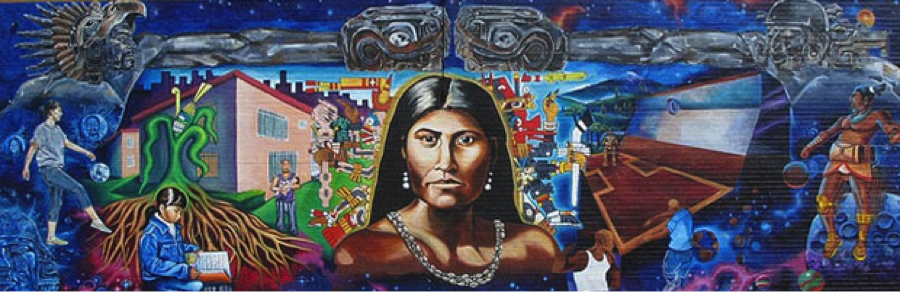 Toypurina led a rebellion against the San Gabriel Mission in California. The missionaries under Junipero Serra pioneered the Spanish colonisation of California. Serra was canonised in 2015. Across the Americas, indigenous peoples were stripped of their lands by European colonisers or, post-independence, by the countries’ non-indigenous elites. In Argentina, which is almost 8 times the size of Germany, the southern half of the country was independent indigenous territory until the late 19th century. From 1878-1885, the brutal military Conquista del Desierto was carried out. After the sell-off and privatisation of the land that followed, only 12,500 hectares of territory remain today (1 ha ≈ 1 football field). The largest landowner since the land privatisation campaign under neoliberal President Carlos Menem in the 1990s is the Italian fashion group Benetton. A law passed in 2011 by the Cristina Kirchner government (2007-2015) to prevent land sales to foreign companies – but not to Argentine ones – was reversed by President Mauricio Macri (2015-2019).
Further Reading:
*Suppressed Histories: The holy woman Toypurina
*Indian Country Today Media Network: Junipero Serra as Indian Killer
*Petition: Urge Pope Francis to abandon the canonization of Junipero Serra
*Eduardo Galeano (1997): Open Veins of Latin America: Five Centuries of the Pillage of a Continent. New York. Monthly Review Press.
OK
Development cooperation means helping people to help themselves. It is value-oriented, but it is also interest-driven. I never made a secret of it. Development cooperation does not have to be harmful to German companies.
Correct!
Development cooperation means helping people to help themselves. It is value-oriented, but it is also interest-driven. I never made a secret of it. Development cooperation does not have to be harmful to German companies.
Year:
2009
Author Bio:
Dirk-Ekkehard Niebel (born in 1963) is a former German politician (FDP). He was Minister for Economic Cooperation and Development from 2009 to 2013. He has been working as a consultant for the weapons and automotive supplier Rheinmetall since 2015.
Source:
FAZ (Manfred Schäfers, 20.11.2009): Entwicklungshilfe muss sich nicht überflüssig machen.
Context:
 According to Niebel, his ministry was not a “world social agency” (Herter 2010). An example: In 2001, the Kaweri coffee plantation opened in Uganda with investments from the German company Neumann (NKG). The NKG demanded that the land be uninhabited. Residents should be resettled with compensation. Resettlement was left to the Ugandan government, which forcibly displaced 2,000 people. When the expellees started a campaign against this with the NGO FIAN, Niebel took a protective stance in front of the German company in 2013: “The Kaweri plantation is the largest German investment in Uganda and has the attention and goodwill of the German government” (Die Zeit, August 13th, 2013). 2013). At the end of 2019, the Ugandan state offered the displaced persons compensation (FIAN, February 17, 2020).
Further Reading:
*FIAN International (2019): Human Rights violations in the context of Kaweri coffee Plantation/Neumann Kaffee Gruppe in Mubende/Uganda.
OK
Yes, my sin — my greater sin and even my greatest sin is that I nationalised Iran’s oil industry and discarded the system of political and economic exploitation by the world’s greatest empire. This at a cost to myself, my family; and at the risk of losing my life, my honour and my property. With God’s blessing and the will of the people, I fought this savage and dreadful system of international espionage and colonialism.
Correct!
Yes, my sin — my greater sin and even my greatest sin is that I nationalised Iran’s oil industry and discarded the system of political and economic exploitation by the world’s greatest empire. This at a cost to myself, my family; and at the risk of losing my life, my honour and my property. With God’s blessing and the will of the people, I fought this savage and dreadful system of international espionage and colonialism.
Year:
1953
Author Bio:
Mohammad Mossadegh (1882-1967) was an Iranian lawyer, politician and the first prime minister of independent Iran. The quote is from his speech in court in 1953, in which he defended himself against charges of high treason.
Source:
Context:
 As part of a wave of anti-colonial movements, Mohammad Mossadegh became Iran’s first democratically elected prime minister in 1951. In the same year, he was voted Man of the Year by the US Time Magazine for making the nationalisation of British-controlled oil production his first official act. However, in 1952 Dwight D. Eisenhower came to power in the USA, and he promoted a strongly anti-communist course and condemned any form of nationalisation. The CIA had previously noted that the situation in Iran could only be “saved” with a “new prime minister” (File Foreign Relations of the United States 1951: 87). From 1953 onwards, the CIA incited the ruling elite in Iran against Mossadegh and bribed the population with money, as corroborated by documents published in 2017 (Deutsche Welle 2017). In Latin America (e.g. Chile 1973, Allende vs. Pinochet), Africa (e.g. 1961 in Congo, Lumumba vs. Mobuto) and Asia (e.g. 1967 in Indonesia, Sukarno vs. Suharto), governments also emerged from socialist or anti-colonial movements and were overthrown and replaced by dictatorships.
Further Reading:
*Deutsche Welle (2017): 1953: Irans gestohlene Demokratie.
*Foreign Relations of the United States (1951-1954).
*Bundeszentrale für politische Bildung (2013): Zwischen Kolonialismus und Nationenbildung.
OK
Our forest is humid and does not allow fire to spread inside it. The fires occur in practically the same places where indigenous people and mixed-race farmers burn their gardens in already deforested areas.
Correct!
Our forest is humid and does not allow fire to spread inside it. The fires occur in practically the same places where indigenous people and mixed-race farmers burn their gardens in already deforested areas.
Year:
2020
Author Bio:
Jair Bolsonaro (born 1955) has been President of Brazil since 2019. He has been heavily criticised for his authoritarian and neoliberal politics, as well as for his misogynistic, homophobic and racist statements.
Source:
Telesur, 23.09.2020: Bolsonaro Blames Indigenous Peoples, NGOs, Press for Disasters.
Context:
 From 2000 to 2018, an area of rainforest the size of Spain, some 513,016 km², was cut down (Amazonia Socioambiental 2020). Bolsonaro in particular, whose political career is supported by large landowners (Süddeutsche, 17.05.2020), is promoting the destruction and exploitation of the rainforest and, as a consequence, climate change. New areas for cattle breeding and agriculture are to be deforested. The extraction of natural resources such as minerals or oil in the Amazon region will also be permitted by new laws. In addition, Bolsonaro’s plans will soon make it easier for companies to obtain legal titles to indigenous lands. The German federal government signed a supply chain agreement with Brazil in December 2019, according to which imports of meat, soy and wood were to be produced both in deforestation-free land and without slave-like working conditions (Nachdenkseiten 2021). However, one year later, while imports from Brazil had increased overall, only 22% of soy imports were certified (Deutsche Umwelthilfe 2020). In the second largest rainforest in the world, in western Papua New Guinea, which has been occupied by Indonesia since 1963, deforestation is being promoted in indigenous areas (Raki Ap 2021) and the local population suppressed (UN Human Rights Office, 30.11.2020). At the same time, Western corporations such as BP continue to go about their business undisturbed there are active and do not ‚ want to interfere in political matters (Financial Times, 16.09.2019).
Further Reading:
*Humans Rights Watch (2021): “Attempt to Greenwash Bolsonaro’s Environmental Record Backfires at OECD.”
OK
Diversity in all its forms is first and foremost a reality, a general condition. It is an opportunity to enable encounters and learning experiences. It is a means and not an obstacle to unity. It is a treasure for humanity as it is part of the intangible heritage. Identity is a fundamental part of the individual. It is not monolithic, but can be multiple. It brings together different realities: religious, national, cultural, linguistic and others. We see our identities as inclusive: as sources of fulfillment and rootedness that enable us to open up to others and to get to know their identities.
Correct!
Diversity in all its forms is first and foremost a reality, a general condition. It is an opportunity to enable encounters and learning experiences. It is a means and not an obstacle to unity. It is a treasure for humanity as it is part of the intangible heritage. Identity is a fundamental part of the individual. It is not monolithic, but can be multiple. It brings together different realities: religious, national, cultural, linguistic and others. We see our identities as inclusive: as sources of fulfillment and rootedness that enable us to open up to others and to get to know their identities.
Year:
2014
Author Bio:
France, Samuel Grzybowski, 2014
Samuel Grybowski, born in Paris in 1992, is a Jewish social entrepreneur.
Source:
Public Speech, Paris 2014.
Context:
In 2009 he founded Coexister, an association for encounters between people of different religions and worldviews. Today, Coexister is Europe’s largest interreligious youth organization.
Further Reading:
OK
The greatest difficulty with our boys is to overcome their innate aversion to work. You have to know that they are the children of born beggars.
Correct!
The greatest difficulty with our boys is to overcome their innate aversion to work. You have to know that they are the children of born beggars.
Year:
1900
Author Bio:
Anonymous priest who evangelised among the Lakota Sioux in North America about his pupils.
Source:
Quote: Jasmin Lörchner (23.11.2016): Wie die Sioux katholisch wurden. In: Spiegel Online. The year (1900) is an approximation.
Picture: Wikimedia

Context:
 Lakota spirituality was fundamentally different from Christianity. They believed that they only thrived thanks to nature’s benevolence and did not consider humans to be the pinnacle of creation. Sitting Bull and many others protested against the confinement of the Sioux (to which the Lakota belong) in reservations, and against living conditions in them. The Sioux also rejected attempts to forcibly assimilate them, as well as Christianity – missionary work was brutal and involved in the colonial subjugation and exploitation of Native Americans.
Further Reading:
*MariJo Moore (2003): Genocide of the Mind. New Native American Writing. New York: Nation Books.
OK
“The doctor immediately recognized that the man was suffering from terminal syphilis. He prescribed him penicillin – and got into terrible trouble with the disease control authorities. He was accused of treating someone who was not allowed to be treated. No wonder, he knew nothing about the study.”
Correct!
“The doctor immediately recognized that the man was suffering from terminal syphilis. He prescribed him penicillin – and got into terrible trouble with the disease control authorities. He was accused of treating someone who was not allowed to be treated. No wonder, he knew nothing about the study.”
Year:
1965
Author Bio:
Peter Buxtun (born 1937) is an American social worker and former employee of the United States Public Health Service who became known as a whistleblower due to his publication of the Tuskegee Syphilis Study. The experiment was discontinued after it became public knowledge.
Source:
Der Spiegel (Johanna Lutteroth), 07.06.2012: “Medical scandal Tuskegee death study.”
Context:
 In the 1930s, doctors began abusing poor black male farm workers suffering from syphilis in the so-called Tuskegee Study. They wanted to investigate how syphilis develops if it remains untreated. The study was conducted by the Public Health Service, an agency of the US Department of Health and Human Services. Almost 400 sick men in Tuskegee (Alabama) were deliberately deprived of effective treatment without their knowledge. It was forbidden to prescribe Penecellin to patients when it was discovered to be an effective drug against syphilis in 1943. The aim was to monitor the progression of the disease and its late effects. “The study had no scientific value at all. Because the gruesome consequences of syphilis had been known for centuries” (Berliner Zeitung, 19.05.2022). The study was only discontinued in 1972, after Peter Buxton had tried in vain for years to draw attention to the abuse. In the 1940s, the same group of researchers infected hundreds of people in Guatemala with the virus in order to research the disease (ibid.). Although the researchers described the Tuskegee study in 15 medical journals, there was never an outcry in the medical community (Martin J. Tobin 2022).
Further Reading:
*Berliner Zeitung (Annett Stein), May 19, 2022):“Tuskegee experiment: Consequences of the cruel human experiments continue to this day.”
*Tobin (2022):“Uncovering the Tuskegee Syphilis Study: The Story and Timeless Lessons.”
OK
Art. 3. There cannot exist slaves on this territory, servitude is therein forever abolished. All men are born, live and die free.
Art. 4. All men, regardless of colour, are eligible to all employment.
Art. 5. There shall exist no distinction other than those based on virtue and talent, and other superiority afforded by law in the exercise of a public function. The law is the same for all whether in punishment or in protection.
Correct!
Art. 3. There cannot exist slaves on this territory, servitude is therein forever abolished. All men are born, live and die free.
Art. 4. All men, regardless of colour, are eligible to all employment.
Art. 5. There shall exist no distinction other than those based on virtue and talent, and other superiority afforded by law in the exercise of a public function. The law is the same for all whether in punishment or in protection.
Year:
1801
Author Bio:
Toussaint Louverture (1743-1803) was a formerly enslaved Haitian who led the resistance against France. These lines come from a letter Louverture wrote to Napoleon, to which he attached this constitutional text.
Source:
Constitution of Haiti (1801)
Context:
 It began in 1791 with an uprising of 50,000 people: Haitians, most of whom were enslaved, fighting for their independence from France. In 1794, slavery was abolished. With the war of independence dragging on for several years, Napoleon threatened to reintroduce slavery. But the Haitians won and became the first Latin American country to become independent in 1804. However, a coalition of European states and the United States boycotted the country. Since the prosperity of colonial states was based on the plantation economy and therefore on the principle of slavery, they feared that the Haitian revolution could also inspire other oppressed peoples. As a result, Haiti was forced into isolation in terms of foreign policy and the new state was obliged to make vast compensation payments to former slave owners. In return for recognising Haiti as an independent state in 1825, France demanded compensation of 150 million francs. It was not until 1883 that Haiti was finally able to pay off this amount which it did with the help of loans (Ziegler 2010). The high national debt it was saddled with immediately after independence is often seen as marking the start of Haiti’s economic dependence on the outside world. At the World Conference Against Racism in 2001, Haiti demanded compensation from France.
Further Reading:
*Project in Haiti and the Domenican Republic where Youth work on the history of slavery and liberation.
*Jean Ziegler (2010): Haiti und der Hass auf den Westen. In Blätter für deutsche und internationale Politik.
OK
“Current epidemiologic evidence identifies several groups in the United States with an increased risk of developing AIDS (3-7). Most cases have been reported among homosexual men with multiple sexual partners, intravenous drug abusers and Haitians, especially those who have arrived in the country in recent years.”
Correct!
“Current epidemiologic evidence identifies several groups in the United States with an increased risk of developing AIDS (3-7). Most cases have been reported among homosexual men with multiple sexual partners, intravenous drug abusers and Haitians, especially those who have arrived in the country in recent years.”
Year:
1983
Author Bio:
The Centers for Disease Control and Prevention is an agency of the US Department of Health and Human Services. The CDC was originally founded in 1946 to ensure the control of malaria in the post-war period. The agency maintains field offices in 49 states. The director from 1983 to 1989 was James O. Mason.
Source:
Context:
 Other epidemics have also resulted in BIPoC or people from the Global South being stigmatized. As HIV/AIDS spread in the early 1980s, the Centers for Disease Control and Prevention, under Director James O. Mason, issued a statement classifying Haitians as a high-risk group for HIV/AIDS. The claim was later withdrawn, but the consequences were fatal. The origins of this can be traced back to erroneous scientific assumptions. In 1992, the CDC again issued a warning that Haitian refugees could pose an “unjustifiable threat to the health of the United States”(Washington Post, August 7, 1992). In 2007, another study was published linking HIV to Haiti, stating that “subtype B probably migrated from Africa to Haiti around 1966” and then on to the United States. They base this hypothesis on virus sequences from only five (!) Haitian Americans who contracted AIDS in 1981 and who came to the United States “after 1975”. This stigmatization has had far-reaching effects, including social isolation, discrimination in health care and everyday life, and a negative impact on the entire Haitian community in the United States.
Further Reading:
*The Guardian (Edna Bonhomme), 22.02.2021:“From HIV to Covid, pandemics show us fear of disease is colored by prejudice“
OK
If this [economic] shock approach were adopted, I believe that it should be announced publicly in great detail, to take effect at a very close date. The more fully the public is informed, the more will its reactions facilitate the adjustment.
Correct!
If this [economic] shock approach were adopted, I believe that it should be announced publicly in great detail, to take effect at a very close date. The more fully the public is informed, the more will its reactions facilitate the adjustment.
Year:
2000
Author Bio:
Milton Friedman (1912-2006) was a Chicago School economist, advocate of neoliberalism, and winner of the 1976 Nobel Prize for Economics. The quote comes from a letter Friedman wrote to Chilean dictator Pinochet.
Source:
Naomi Klein (2007: 75)
Context:
 Milton Friedman believed that societies had to be radically changed: economic forces should be allowed to rule freely without any state interference. This concept of freedom has become known in history as neoliberalism. Friedman’s main work is called Capitalism and Freedom (1962). However, this freedom primarily means economic freedom, often at the expense of people and nature (see Klein 2010: 85, German edition). Politicians, he argued, should use shock strategies to bring about change towards neoliberal capitalism. According to him, crisis situations such as natural disasters should be exploited for this purpose: it was when societies were in a state of shock as a result of a catastrophe, that economic changes could best be implemented. This was because in such exceptional situations, people would be too overwhelmed to resist “reforms” such as the privatisation of education, health and social security. Friedman and his Chicago Boys (Economists trained at the University of Chicago) experimented with their theories, especially in dictatorships such as Chile under General Pinochet.
Further Reading:
Naomi Klein (2007): The Shock Doctrine. The Rise of Disaster Capitalism. Toronto: Knopf Canada.
OK
The noble term “culture” takes the place of the frowned upon expression “race”, but remains a mere cover for a brutal claim to power.
Correct!
The noble term “culture” takes the place of the frowned upon expression “race”, but remains a mere cover for a brutal claim to power.
Year:
1960
Author Bio:
Theodor W. Adorno (1903-1969), born in Frankfurt am Main as Theodor Ludwig Wiesengrund, was a philosopher and co-founder of the Frankfurt School, known for studies on the authoritarian character.
Source:
Theodor W. Adorno (1975): Schuld und Abwehr. Gesammelte Schriften Band 9/2. Frankfurt a. M.: Suhrkamp.
Context:
 In 1933, Adorno was banned from teaching by the Nazis because he came from a Jewish family on his father’s side. He therefore emigrated to the USA. After his return in 1953, he observed how in post-Nazi Germany the term “race” had become taboo and was gradually being eliminated from everyday usage. Together with Max Horkheimer in their Dialectic of Enlightenment, he developed a critique of the Enlightenment and progressive thinking in the context of German society after Auschwitz. Etienne Balibar and Stuart Hall later built on observations made by Adorno in their research on “cultural racism” and “racism without race”.
Further Reading:
*Stuart Hall (1990): Cultural Identity and Diaspora.
OK
For the power of inclosing Land, and owning Propriety, was brought into the Creation by your Ancestors by the Sword; which first did murther their fellow Creatures, Men, and after plunder or steal away their Land, and left this Land successively to you, their Children. And therefore, though you did not kill or theeve, (…) you justifie the wicked deeds of your Fathers; and that sin of your Fathers, shall be visited upon the Head of you, and your Children, to the third and fourth Generation, and longer too, till your bloody and theeving power be rooted out of the Land.
Correct!
For the power of inclosing Land, and owning Propriety, was brought into the Creation by your Ancestors by the Sword; which first did murther their fellow Creatures, Men, and after plunder or steal away their Land, and left this Land successively to you, their Children. And therefore, though you did not kill or theeve, (…) you justifie the wicked deeds of your Fathers; and that sin of your Fathers, shall be visited upon the Head of you, and your Children, to the third and fourth Generation, and longer too, till your bloody and theeving power be rooted out of the Land.
Year:
1649
Author Bio:
Gerrard Winstanley (1609-1679) was originally a clothes merchant who went bankrupt in the Civil War and thereafter became a Protestant reformer and political activist in England.
Source:
Gerrad Winstanley (1649): A declaration from the poor oppressed people of England.
Context:
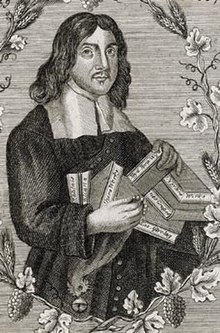 Even before Winstanley, there were many heretic movements in France and Italy in the 11th century, most of them founded by women, that rebelled against the omnipotence of church and state (Federici 2014: 48, German edition). Centuries later, once women had been ousted from public life, Winstanley was one of England’s most notorious reformers (or diggers). Diggers are often referred to as the predecessors of the communists. They occupied and tilled public lands, distributing the proceeds freely to those in need, promoting comprehensive land reform and common ownership. Winstanley based this early communism exclusively on the Bible. The digger communes that had formed throughout England were finally crushed in 1651. Local landowners were mostly responsible for this.
Further Reading:
*The Guardian (1999): Levels of Optimism.
*Silvia Federici (2014): Caliban and the Witch: Women, the Body and Primitive Accumulation. New York: Automedia.
OK
Once the Jews had emigrated, they could come into contact unhindered with their racial comrades from the rest of the world and do more damage to the deserted country than before. […] In addition, the Jews were getting closer to their goal of establishing a Jewish nation state” […]. I would like to allow myself to draw your attention to the fact that it would be very appropriate and more appropriate to prevent the Jews from emigrating from your country and to send them to where they are under strong control, e.g. to Poland. This avoids their danger and does a good, grateful deed towards the Arab people…
Correct!
Once the Jews had emigrated, they could come into contact unhindered with their racial comrades from the rest of the world and do more damage to the deserted country than before. […] In addition, the Jews were getting closer to their goal of establishing a Jewish nation state” […]. I would like to allow myself to draw your attention to the fact that it would be very appropriate and more appropriate to prevent the Jews from emigrating from your country and to send them to where they are under strong control, e.g. to Poland. This avoids their danger and does a good, grateful deed towards the Arab people…
Year:
1941
Author Bio:
Palestine, Mohammed Amin Al-Husseini (1895-1974)
Al-Husseini was an Islamic clergyman and Palestinian Arab nationalist from one of Jerusalem’s most influential families. He became known as the Grand Mufti of Jerusalem.
Source:
Sönke Zankel: The Jew as Anti-Muslim. In: Niklas Günther, Sönke Zankel (Ed.): Abrahams Enkel. Stuttgart 2006, p. 48.
Context:
Amin al-Husseini played a decisive role in the spread of modern anti-Semitism in the Arab region and the cooperation between Islamist anti-Semites and the National Socialists. He was a staunch supporter of the extermination of European Jews in the German Reich and in the areas occupied by Germany. He made contact with the National Socialists, won support from German leadership circles and lived in Berlin from October 1941 until the end of the Second World War. During this time he became a member of the SS and carried out propaganda for Germany in Arabic. In the late stages of the World War, al-Husseini helped mobilize Muslims for the Waffen SS in the Balkans. After the war, al-Husseini was wanted as a war criminal in several European countries and handed over to the French authorities after his arrest in Switzerland. After France, England and the USA for strategic reasons refrained from indicting Husseini as a war criminal, he found asylum in Egypt in 1946, from where he pursued his ideas. As a result of the massive flight of Palestinians that began with the Palestinian War of 1948, he lost his political leadership position, which eventually passed to the PLO under Yasser Arafat.
Further Reading:
David Motadel – Für Prophet und Führer – die islamische Welt und das dritte Reich
OK
We have given jobs to every family that has lost their homes and land to the Dock Complex.
Correct!
We have given jobs to every family that has lost their homes and land to the Dock Complex.
Year:
2005
Author Bio:
M.L. Meena (birthdate unknown) was Deputy Chairman of the Haldia Dock Complex in Calcutta, India.
Source:
Quoted in Samata Biwas (2016): Haldia: Logistics and its Other(s). Workshop-paper Kolkata Research Group.
Context:
 A lot of migration also takes place within states. When India freed itself from British colonial rule in 1947, the former colony was divided into the independent states of India and Pakistan. “For more than ten million people on both sides of the new border, this was tantamount to resettlement, flight and expulsion” (Federal Agency for Civic Education (2014): The Partition of British India 1947). Other forced migrations take place because of so-called development projects. The quote comes from the Kolkatta area of West Bengal, where many people were dispossessed for the construction of the dock and harbour complex. Many have been waiting for compensation for decades.
Further Reading:
*Samata Biswas (2017): Haldia, A Port City in India.
*Kalim Siddiqui (2012): Development and Displacement in India: Reforming the
Economy towards Sustainability.
OK
As you all know, our country was once a German colony. The Germans first began to occupy the country in XXXX. For fifteen years, between XXXX and XXXX, my people, with bows and arrows, with spears and clubs, with knives or rusty fought desperately to keep the Germans out. (…) the people fought because they did not believe in the white man’s right to govern and civilise Black people.
Correct!
As you all know, our country was once a German colony. The Germans first began to occupy the country in XXXX. For fifteen years, between XXXX and XXXX, my people, with bows and arrows, with spears and clubs, with knives or rusty fought desperately to keep the Germans out. (…) the people fought because they did not believe in the white man’s right to govern and civilise Black people.
Year:
1956
Author Bio:
Julius K. Nyerere (1922-1999) was the independence leader and later first President of Tanzania. This quote is from a speech he made to the UN about the Maji Maji War of 1905-07. The missing years are 1885, and then again 1885 and 1900.
Source:
Julius Nyerere (1966): Freedom and Unity (Uhuru na Umoja). A Selection from Writings and Speeches. 1952-1965. Oxford: Oxford University Press, p. 40 ff.
Context:
.jpg) Nyerere was commemorating the Maji Maji Rebellion against German colonial rule in what was then German East Africa. This is considered one of Africa’s greatest colonial wars and was built on a broad alliance of different colonised groups. From the 1950s onwards, anti-colonial independence movements fought successfully across the continent: Libya became the first African colony to become independent in 1951, and most African countries followed in the next 25 years. From then on, however, the West employed strategies of economic subjugation (debt and tariff policies). David Budhoo, former IMF economist, wrote: ‘Everything we did from 1983 onward was based on our new sense of mission to have the south ‘privatized’ or die; towards this end we ignominiously created economic bedlam in
Nyerere was commemorating the Maji Maji Rebellion against German colonial rule in what was then German East Africa. This is considered one of Africa’s greatest colonial wars and was built on a broad alliance of different colonised groups. From the 1950s onwards, anti-colonial independence movements fought successfully across the continent: Libya became the first African colony to become independent in 1951, and most African countries followed in the next 25 years. From then on, however, the West employed strategies of economic subjugation (debt and tariff policies). David Budhoo, former IMF economist, wrote: ‘Everything we did from 1983 onward was based on our new sense of mission to have the south ‘privatized’ or die; towards this end we ignominiously created economic bedlam in
Latin America and Africa in 1983-88’ (quoted in Klein 2010: 239).
Further Reading:
*Global Black History (2016): The Maji Maji Revolt in Tanzania 1905-1907.
*Naomi Klein (2007): The Shock Doctrine. The Rise of Disaster Capitalism. Toronto: Knopf Canada.
OK
before
1500
1500
1501
to 1600
to 1600
1601
to 1700
to 1700
1701
to 1800
to 1800
1801
to 1850
to 1850
1851
to 1900
to 1900
1901
to 1925
to 1925
1926
to 1950
to 1950
1951
to 1975
to 1975
1976
to 1990
to 1990
1991
to 2000
to 2000
2001
to 2010
to 2010
after
2011
2011